He Built a $600K/mo Personal Brand... Then YouTube Fought Back.
William Brown took his stupidly simple YouTube personal brand from 0 to $9M revenue in 2 and a half years, completely from scratch.
William Brown took his stupidly simple YouTube personal brand from 0 to $9M revenue in 2 and a half years, completely from scratch.
But then, overnight it was erased from the internet...
Taken out from underneath him - seemingly at random:
So what's the hidden content strategy William used to build his YouTube personal brand so fast in the first place?
And what are the subtle weapons of influence, that I've ranked from persuasive to god tier psychological techniques... that William uses to transform casual viewers into devoted buyers - ready to pay him thousands of dollars.
Well, I've spent the last 17 hours investigating to reveal all of that to you,
AND I'll share the bulletproof formula to turn your existing expertise into a micro personal brand that's immune to:
Random platform bans, algorithm swings or chasing virality.
Now off the back of selling his previous info company for multi 7-figures, William had decided to make a few simple YouTube videos, pick up a few high ticket consulting clients and chill....
But, after 2 videos picking up traction, he realised he'd discovered a gold mine. One that didn't need the nightmare of a massive team, complicated systems or eat up all of his mental energy like his previous business had.
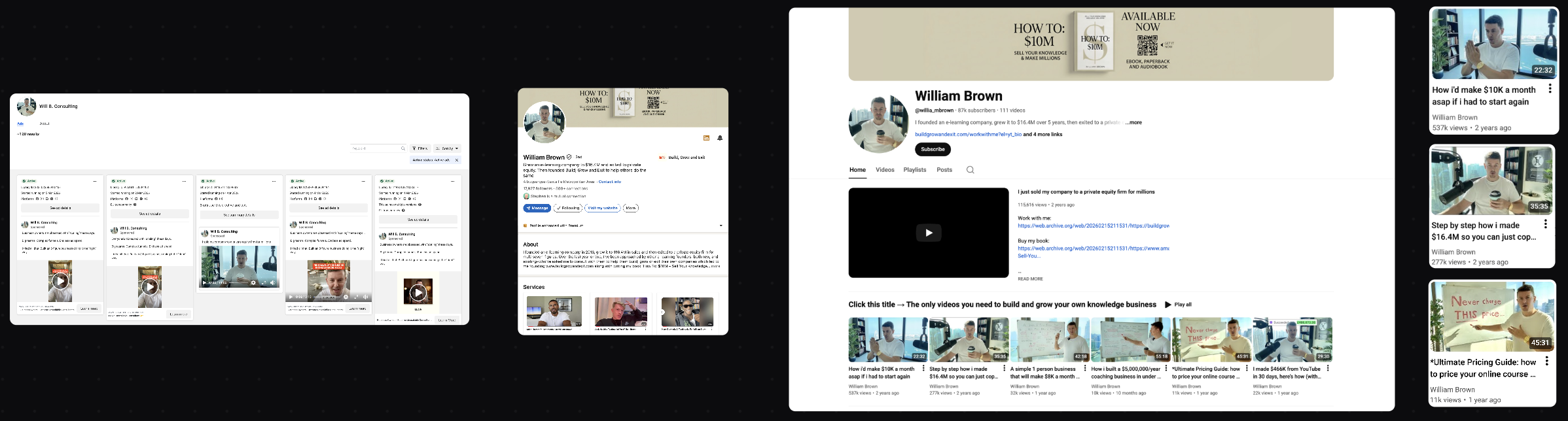
Jumping in to our funnel, we can see William has mostly focused on YouTube, alongside having a copywriter for his Linkedin, and also running cold ads - some of which interestingly are just his videos from YouTube:
But here's where it gets interesting...
If we dig a little deeper into William's video packaging, we'll find the first weapon of influence used.
He keeps his thumbnails very intentionally simple, leading all the attention onto the titles which are essentially promises to his target audience of high value information, condensed and simplified down for them.
Think of each's video packaging as a mini version of Hormozi's offer framework,
selling the offer of clicking the video to the potential viewer:
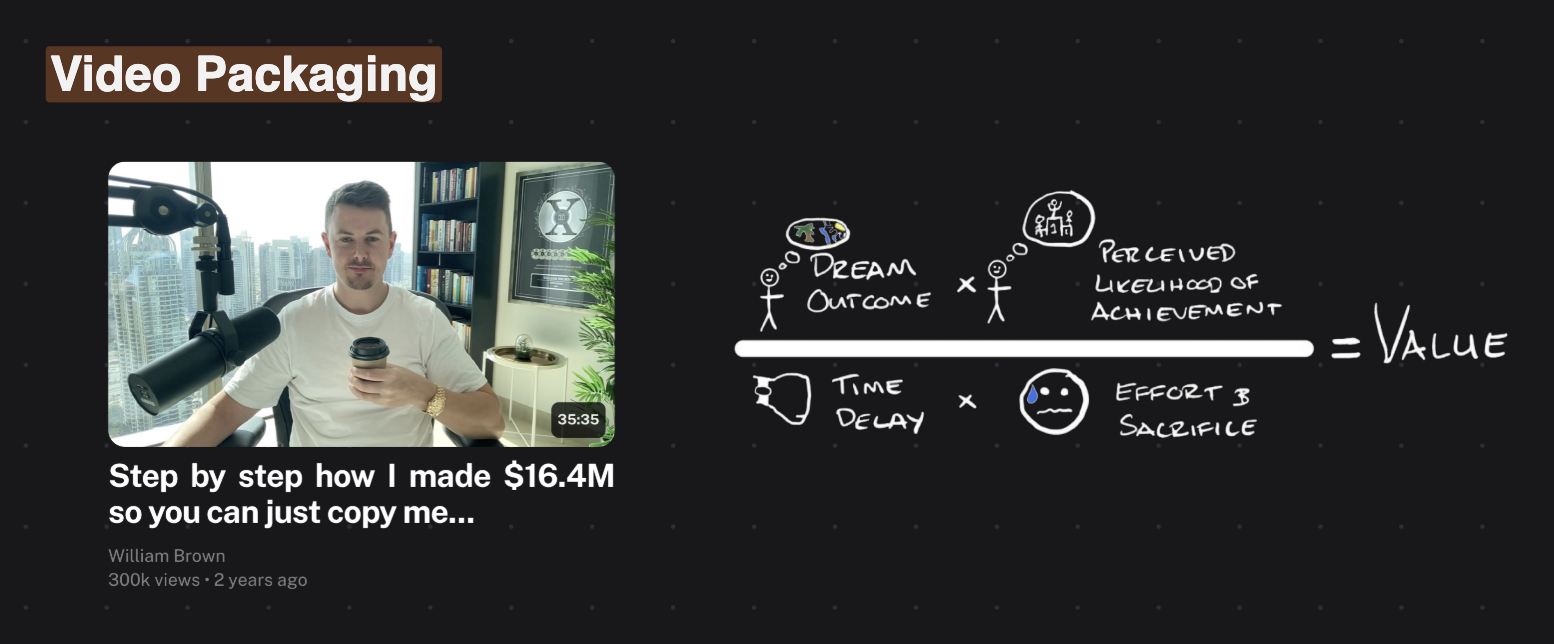
1. Each video is promising a dream outcome,
2. Which is amplified by the perceived likelihood of achievement (it seems simple and achievable)
3. Whilst minimizing the perceived time, effort and sacrifice needed to get there.
But this leads me onto the next weapon of influence that William uses.
His brand framing is engineered to subtly give him instant authority, and no matter what level you're at - if you're not doing this with your personal brand - you're leaving money on the table.
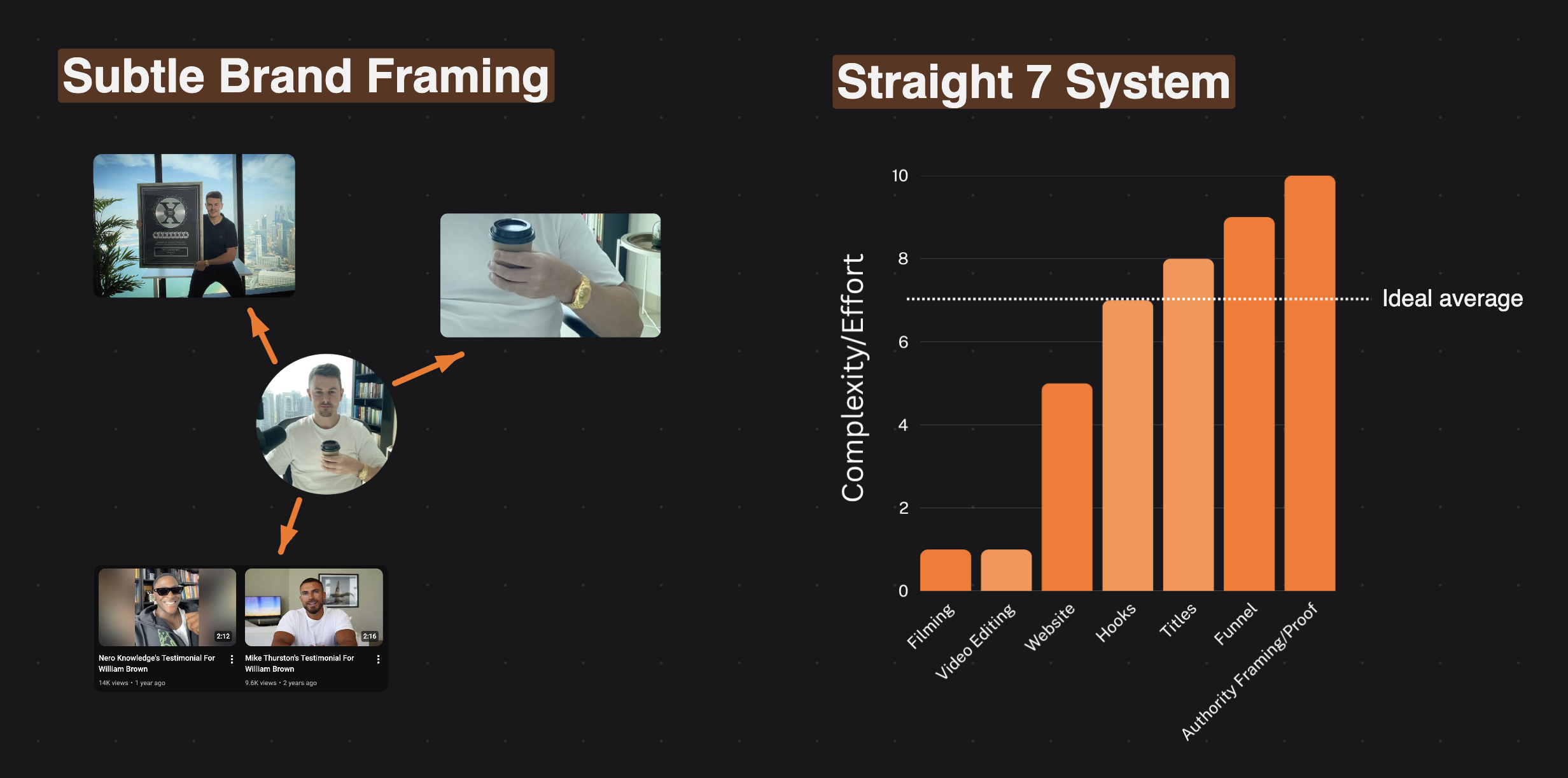
The dubai skyline, the gold watch, the plaques in the background. No one questions whether the guy in a dubai highrise can make money.
This undeniable framing, context and proof surrounding his personal brand - the context around what he's saying - gives him allowances to make his filming, editing, website, everything else - more simplistic.
William's audience of high level people simply wouldn't respond to over the top lifestyle flexing - generally speaking, that's a way to attract a lower value audience, the art is in the subtlety.
The casual, laid back nature of William's videos boil down to the next weapon of influence straight from the 48 laws of power - law 30 - which is make your achievements seem effortless.
But more importantly, the next weapon of influence used here is like the trust Renaissance for the current trust recession we're in (where customers are naturally skeptical)
It's the coffee cup he's holding in videos... Or what it represents.
Because it taps in to the "FaceTime effect" - Williams videos are intentionally casual and seemingly off the cuff, this makes you - the viewer - feel more connected to William. Almost like you're on a FaceTime call with a friend who's helping you out with your business.
Now the next important weapon of influence we're uncovering here that William has used to build this attractive character online all comes down to juxtaposition;
A millionaire sharing business secrets,
chilling with a coffee in a casual video,
no edits, no thumbnails, with the same white shirt on.
It's contrasting two extremes, we imagine millionaire business owners to be intense, with movie-level production quality.
William doing the opposite, creates a gap in our minds that makes him naturally more intriguing.
When you were last magnetically intrigued about someone or topic, it was likely because they had two contrasting extremes. Think self improvement YouTuber in a lazy dressing gown, Multi millionaire business man in a relaxed setting. That's juxaposition.
But this funnels' strength and vulnerability here is that each video acts as its own video sales letter, each video is giving away lots of value and ultimately rewiring the audiences' beliefs around William's model, his solution and his offer.
Most creators like Dan Koe for example, will do this mostly in their owned media (Blog, email list etc) It's owned by them, no one can take it away.
Besides William's book "How to $10M" - most of the conversion from cold viewer to hot buyer I've seen here happens right at the top of funnel here on YouTube, which leaves vulnerabilities in getting wrongfully banned or falling victim to a changing algorithm for example.
The good news is, this can be countered by building a content repurposing system to repurpose existing content.
For example, from YouTube into blog posts, X posts, more LinkedIn posts - even shortform clips, and by doing so you can create a network of different attention assets. Here's some examples I cooked up for William:
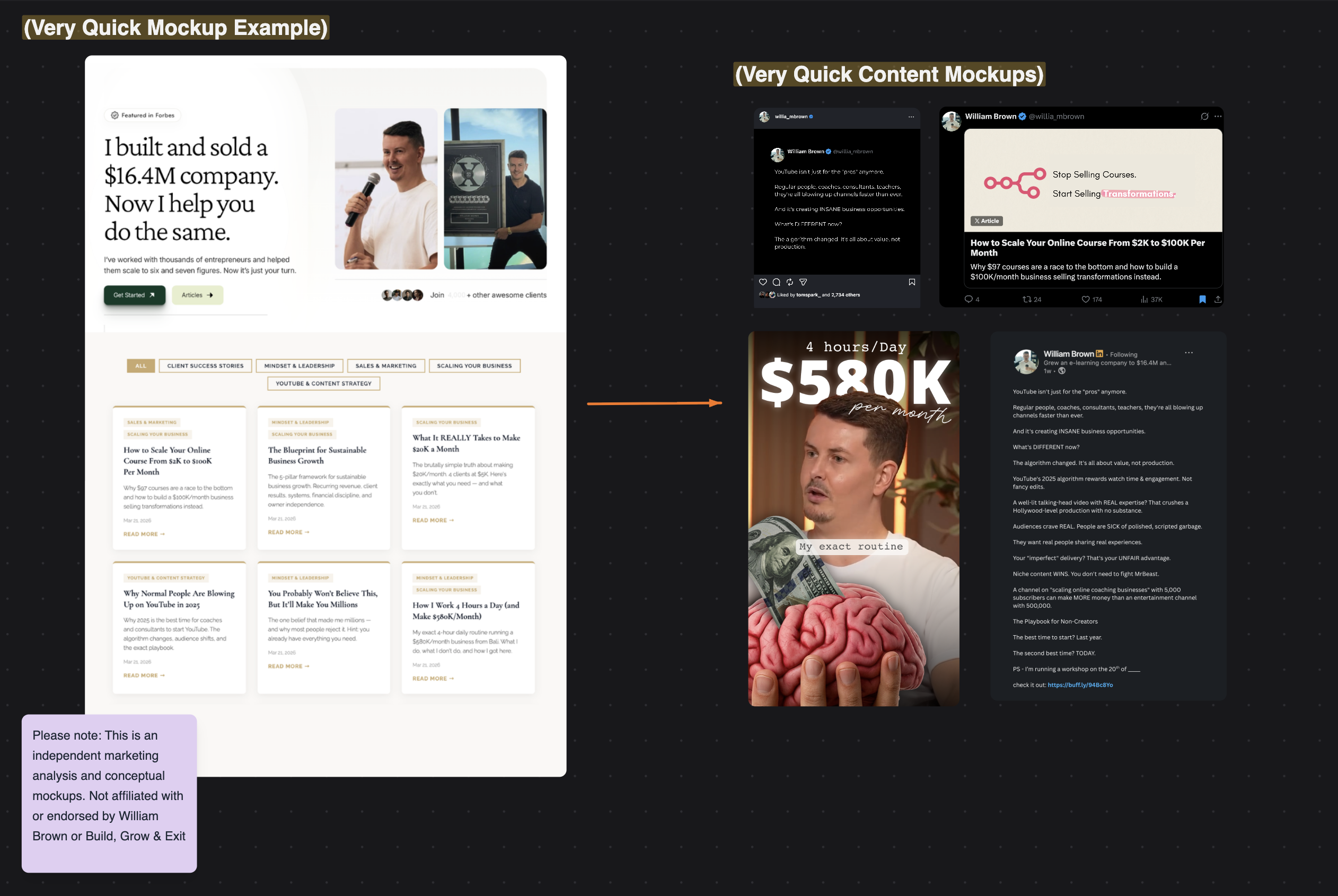
Implementing a content repurposing engine can get William more content out of his content hours - whichcould have mitigated the risk and diversified the top of funnel a bit more.
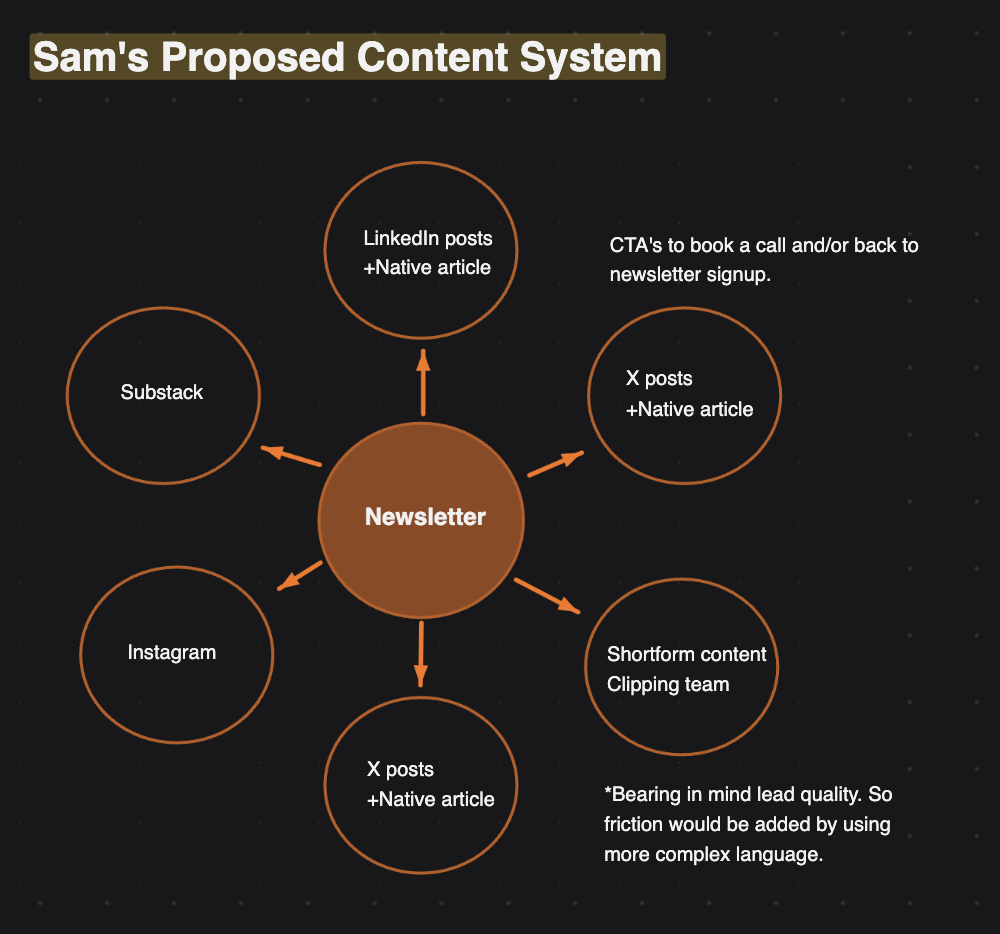
I do understand however that William had been diversifying more and more into paid ads.
So a viewer discovers William from one of his videos, is bought into Williams ideas, methodology and authority.
Now what? How does he then take these simple videos and squeeze $600,000+ per month from them.
Firstly we have William's book. Whilst this is a slower conversion mechanism (you may be assuming people won't read the full book or will leave it on the bookshelf) but it is actually a proven way to warm up your audience and add in call to actions throughout- just like we've seen with Hormozi and Russel Brunsun, who've both built $100M empires off the back of using a physical book to convert their audience.
This feeds in to the next weapon of influence; Once William has given you hours of free value across YouTube videos and his book, you're psychologically more inclined and intrigued to 'return the favour' and pay to learn more from him.
This is called the law of reciprocity.
More importantly, further down the funnel we have Williams websites, Unscaleable Consulting - named after the business model William helps people with, and pitched as a unique mechanism, and also buildgrowexit(dot)com - And this is where william does something super interesting.
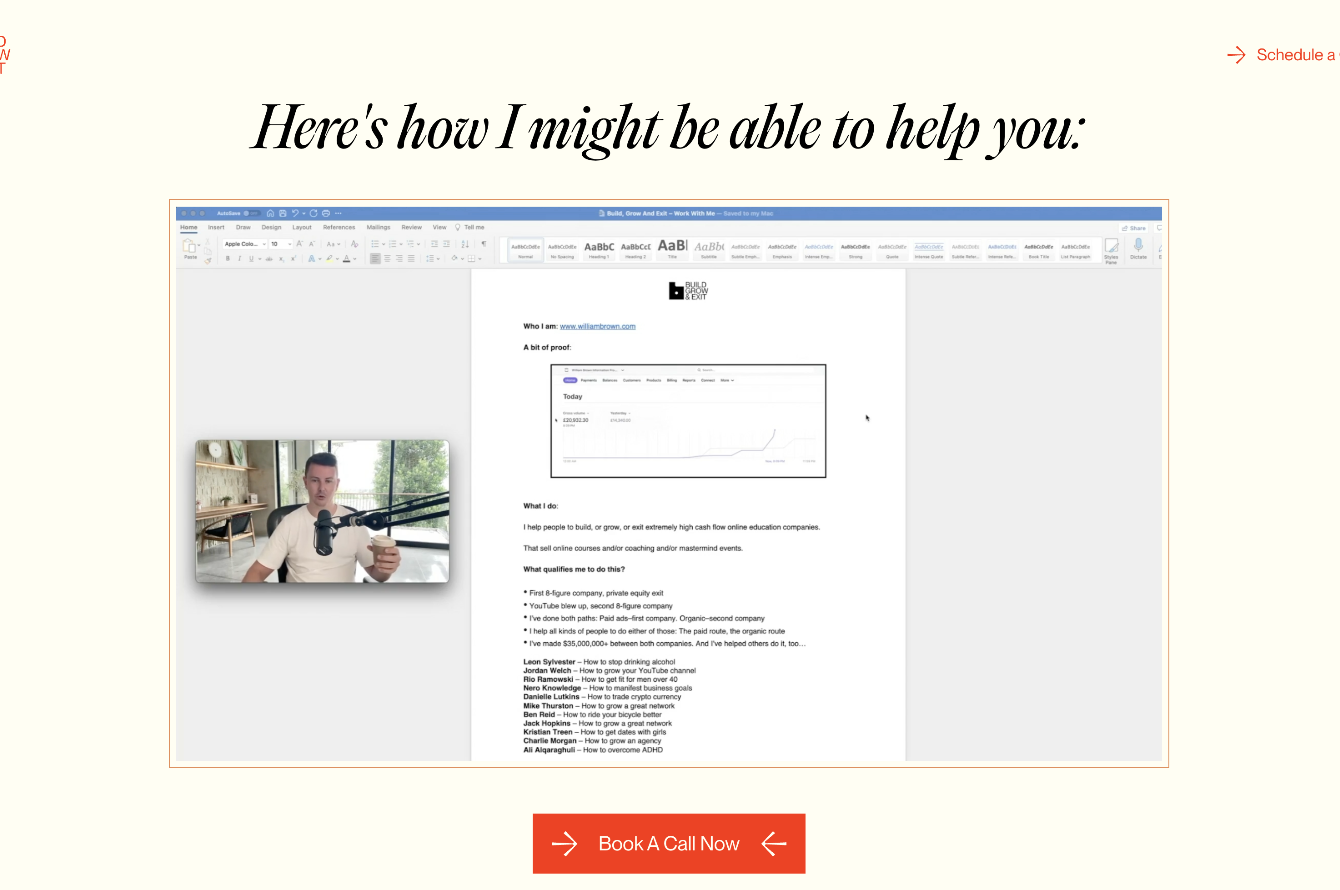
Firstly, William's landing page exactly matches his brand.
Simplistic, straight to the point. Just a simple Google Doc screen recording, coffee in hand, outlining what he helps with and proof he can help with it.
But there's two interesting trapdoors here to filter out bad quality leads and bad customers...
The first of these trapdoors is the friction of intentionally leaving out his personal story, and putting it on a different site. This means that he's not wasting the time of his audience who already knows who he is, and any people that don't know who he is and would make bad leads, are redirected to elsewhere to get to know.
Another one of these trapdoors is introducing the friction of boredom. William has said he purposefully makes long video sales letters, to filter out low quality, low interest, timewasting leads.
Only those who are actually serious will watch the full video.
Where they can then be screened for their details, current problems and bottlenecks, how interested they actually are, monthly income, and so on - to give the sales closers some context and filter out bad leads.
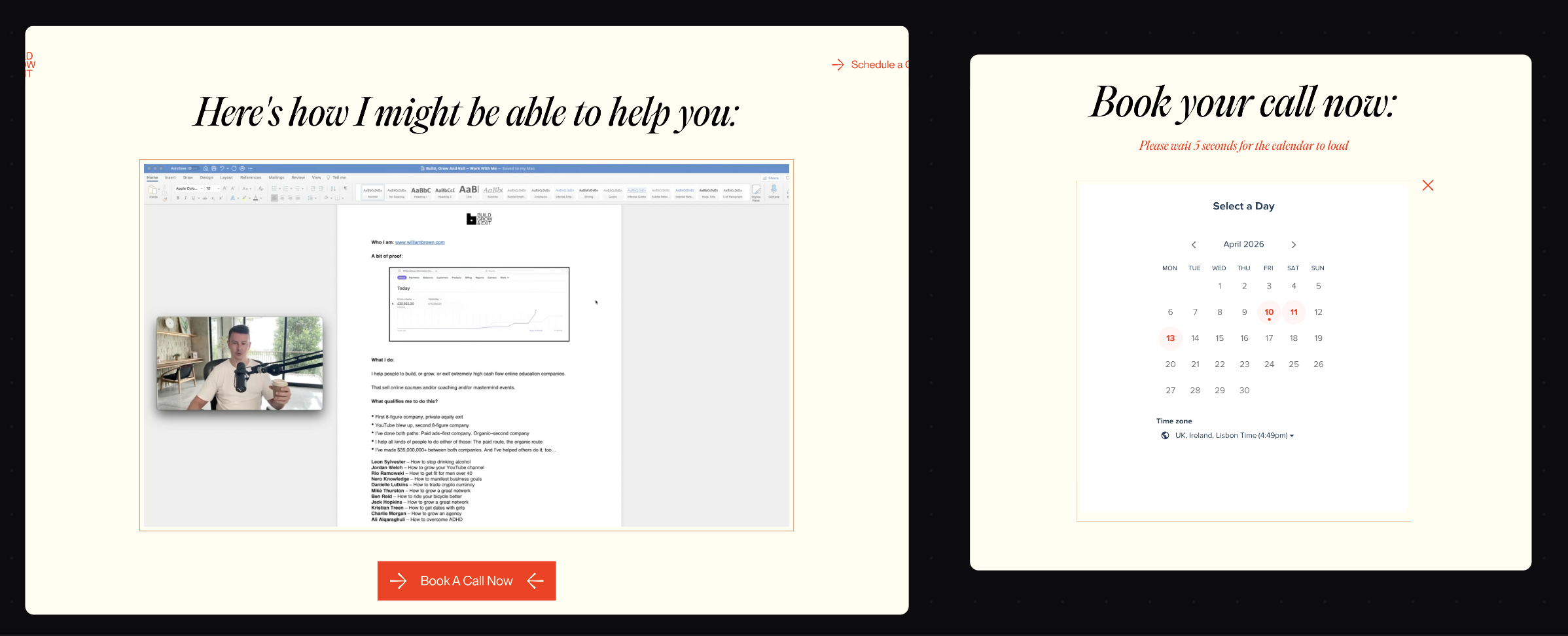
Now this is where we move on to the most important part of William's operation...
The part that if it isn't nailed - the entire process falls apart.
Here's the exact strategy that has brought in millions of dollars for William's business from the comfort of his home, with just a small team of a handful of sales closers.
William has a few offers from what I can tell:
1. A group coaching program,
2. A 1-1 program
3. A Done For You (DFY) service - Where you essentially build a business with the help of William, then with the help of his copywriter, and finally with the help of his media buyer to build the different areas of your business.
But if we dig a little deeper here, the way Williams' sales team close these deals of thousands to tens of thousands of dollars on a zoom call is using his weirdly effective sales call framework that I found in his book.
This sales script essentially gets the lead to:
Identify their own problem,
Qualify themselves,
Picture what their life or business will be like on the other side of fixing that problem,
The sales closer then asks for permission to pitch
Then verbally asks 1 through 10 how good of a fit it sounds for them,
Before (if it's a 9 or a 10) giving the price,
& sharing next steps for onboarding.
Check out the whiteboard above for the full sales call plan.
This process is engineered to cover all potential objections, focus on the problems that the offer solves and guide the lead towards the sale.
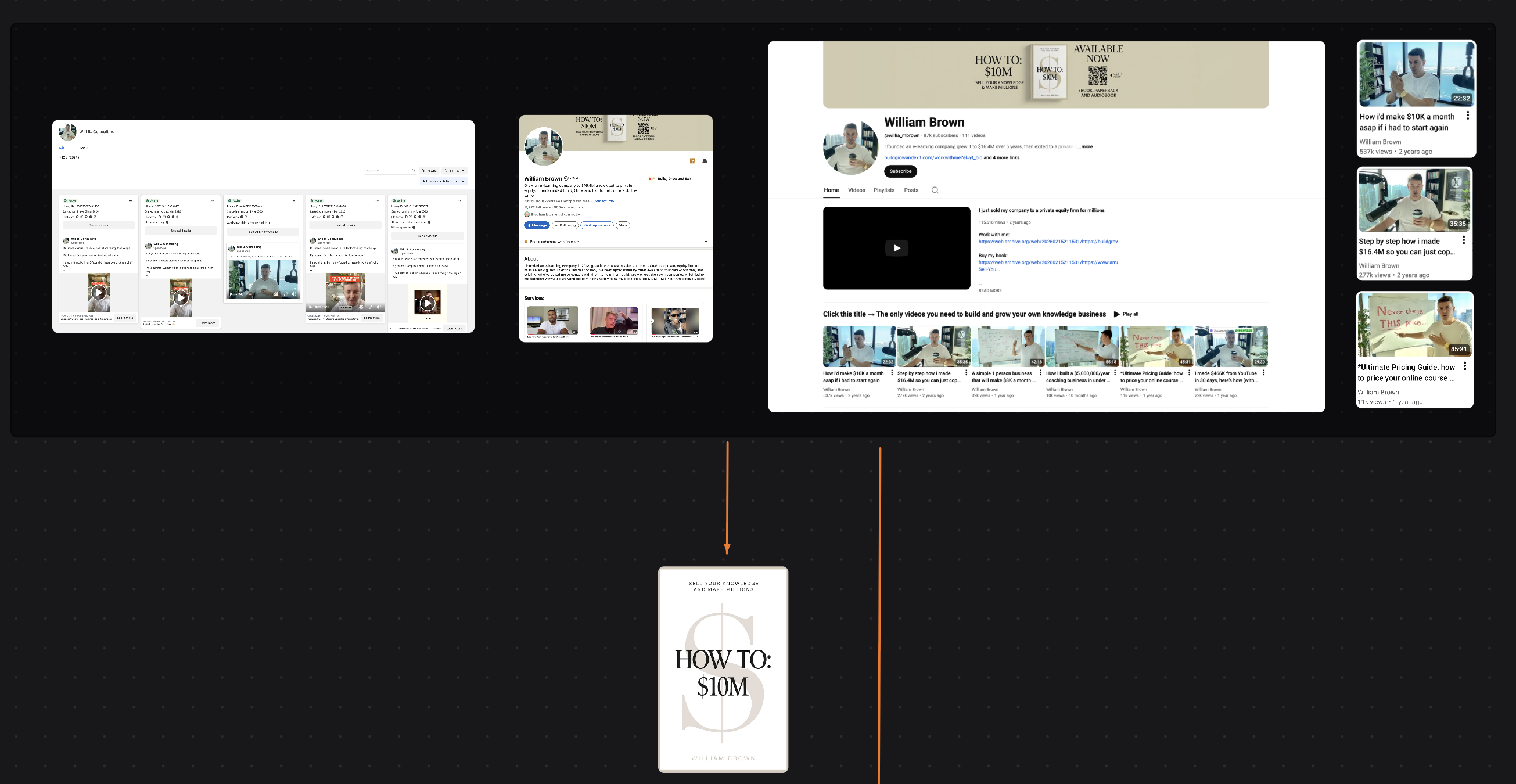
My main takeaway from digging into William Brown's personal brand is that personal branding follows what I call a straight 7 system.
Being an average of 7/10 across the board - in all the facets of personal branding - is the sweetspot.
if you're a 10 in one, it buys you room to be more simplistic in others.
And if you nail all of these points, it's only a matter of time before something clicks and it all works out.
The bottom line
It's not about the next video editing trick, thumbnail hack or getting the latest high end camera.
It's about core fundamentals.
These core fundamentals enable us to make high value content, and they don't change no matter what niche you're in - or your experience level. Because they're derived from human psychology, and at scale - on a long enough time horizon, algorithms reflect this psychology.
High value content always rises to the top long term.