How Gurus Brainwash You to Buy...
The hidden psychological hacks top 1% personal brands use to make MILLIONS from brainwashing their audience.
I’ve spent the last few years;
Meeting, studying and working alongside some of the most powerful personal brands on the planet….
Throughout that time…
I’ve uncovered the secret psychological triggers used by ALL of your favourite personal brands in their videos to become UNIGNORABLE and make millions of dollars off you.
Although I was told not to share these with you:
In this article, you’ll learn every single one of these psychological triggers - ranked from persuasive to outright weapons of influence.
But first, a word of warning:
Once you see these, you’ll never be able to unsee them…
With the rise of AI brain models that can even predict how you will react to videos:
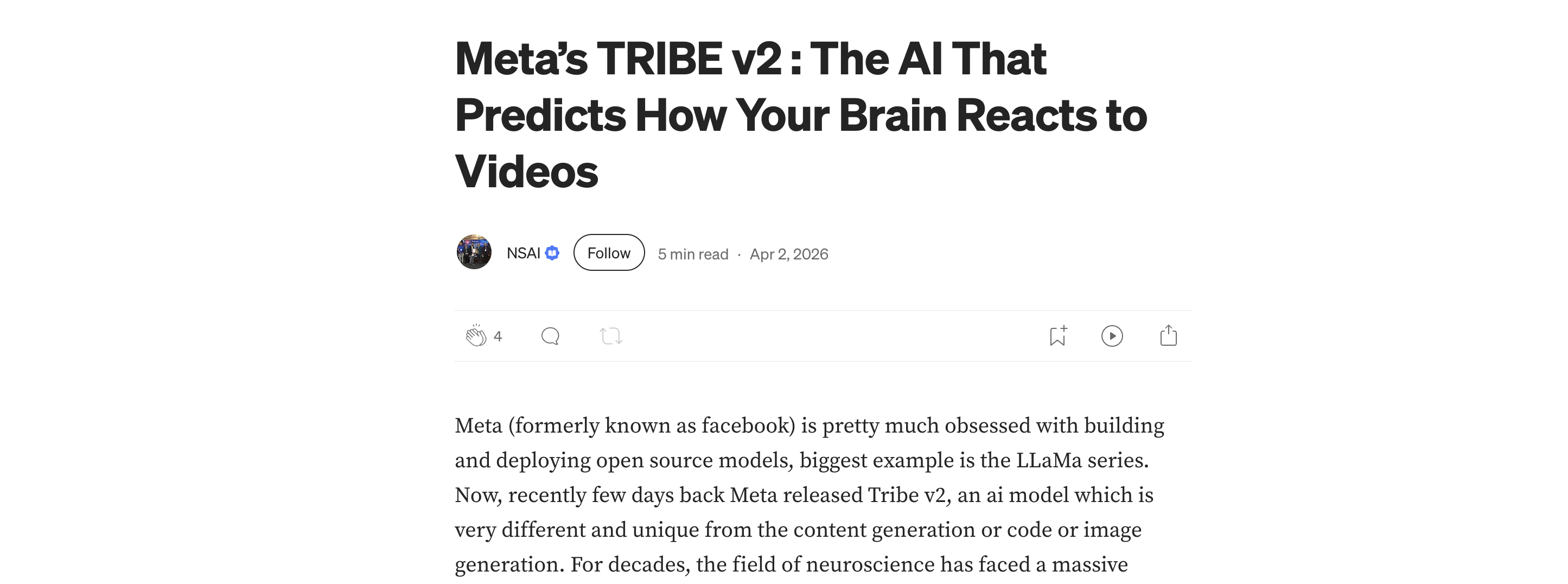
It’s more important than ever that you KNOW these psychological triggers so you’ll no longer be at mercy of them…
AND so you can ethically use them to build your OWN unignorable personal brand…
Because these psychological triggers aren’t inherently good or bad.
They’re used on you every single day.
In fact, I’ve already used 6 of them on you…
A → B Transformation
These personal brands mostly make content and build products to help the past version of themselves:

If they were to just THROW information at you, it simply wouldn’t sink in.
So they attach meaning to the information by strategically sharing their story (or A to B transformation)
Where, point A is somewhere undesirable (like being broke)
and point B is the dream outcome, being sucessful.
This is what’s called…
The Pratfall Effect
Which states that people become more likeable once they share past failures:

It makes them more relatable and human.
Because ultimately;
Personal branding boils down to building a 1-1 relationship… At scale.
But after sharing their story:
Then they need to convince you that you can’t find the value they offer anywhere else.
ONLY through them.
N.E.S.B
The next part of the equation is building the perception of a unique mechanism:
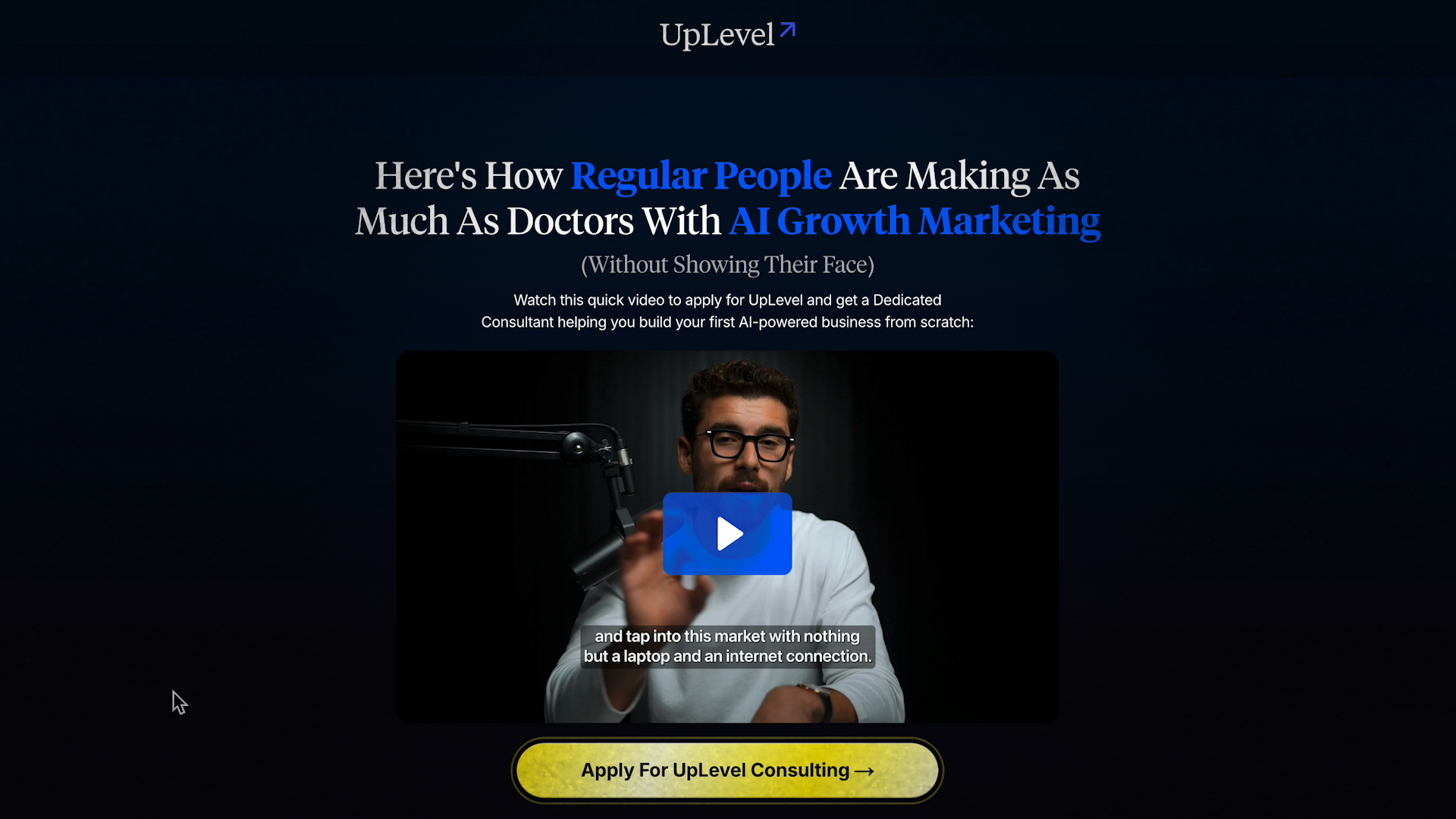
(The unique method that they used to go from point A to point B)
This comes down to making their method seem New and unique to them, Easy to do, Safe with no downsides, and able to get Big results from;
Or what marketers call NESB.
Sounds simple in theory, right?
But why are some personal brands almost effortlessly so magnetic whilst others, maybe even you, get completely ignored?
Subscribe now
Juxtaposition
This simple coffee cup represents how this guy William Brown, has been able to make millions and millions of dollars from his YouTube personal brand.

Self improvement YouTuber in a lazy dressing gown (Hamza)
Million dollar secrets being shared casually with a coffee (William Brown)
Billionaire business man in a vest and cap (Alex Hormozi)
This is contrasting two extremes.
It’s creating a magnetic character through juxtaposition- or contrasting two extremes.
When things are boring, they blend into the background…

Top personal brands KNOW there needs to be an element of the unusual to build an unignorable personal brand.
It’s the exact reason I make videos about personal branding and content creation without fancy thumbnails and without fancy camera equipment. You can watch my video at the top of this article.
It goes against the industry norm.
But alas:
Once you’re bought into them as a character and their unique mechanism, you’ve now entered their “world” …
World Building
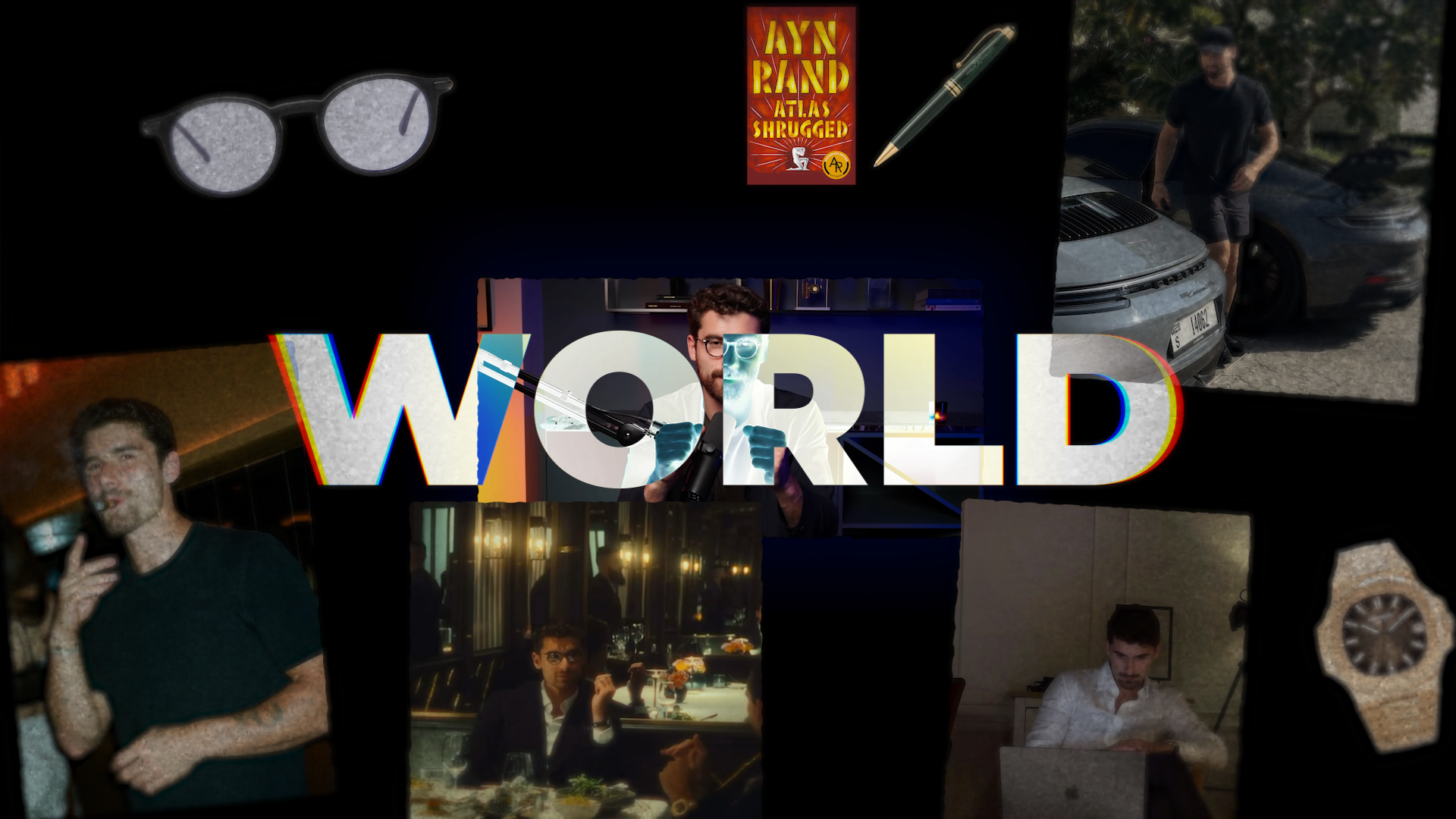
Monk mode for Iman Gadzhi,
Building skills for Dan Koe,
Hustle culture for Alex Hormozi.
When you watch these guys - You’re buying into their vision of the world, their habits, their clothing - whatever it is.
This sentence is at risk of sounding like ChatGPT but there’s no other way of me saying it:
They aren’t just posting videos, they’re building a brand - They’re building a world for you to live in.
It’s the same concept used by film makers, writers, brand designers - and it’s called world building.
But in every world, there’s always a villain…
The joker for batman.
Darth Vader in starwars.
The matrix for Andrew Tate.
“Jeffreys” for Hamza.
There’s a scapegoat or an example of wrongdoing to pin the blame on:
Us vs Them
We can see this leak in to everything from politics to marketing.
Having this ‘in group’ makes YOU the viewer feel like you’re part of something,
& then the introduction of an ‘out group’ (this common enemy) motivates and self-polices the ‘in group’.
Once you’re part of the tribe once you’re in the ‘in group’ and have acquired that identity, you’re way more likely to buy.
Energy Transfer
Not to be wishy washy here but…
Throughout the last nearly half a decade of meeting, studying and working alongside the biggest personal brands on earth, I’ve realised:
The most magnetic ones are MOSTLY authentically themselves...
And by “mostly” - I mean:They lean into certain aspects of their character that they want their personal brand to be centred around.
This is what I call energy transfer.
They’re putting their best foot forwards and transferring energy through the screen, through the video.
They’re doing this through what they say, how they act, but also the picture they paint with the intended emotion of the video.
Music, visuals, tone of voice, speed of voice can all add to what they’re saying, which brings me onto my next point which is probably one of the most valuable skills you can have.
Structuring Information
To put it very simply:
EVEN videos you might think are off the cuff and natural, either subconsciously or intentionally, follow a storytelling structure.
The most commonly used of which is why, what, how, hook for the next section.
Almost every informational piece of content you’ve watched has been following this exact formula:
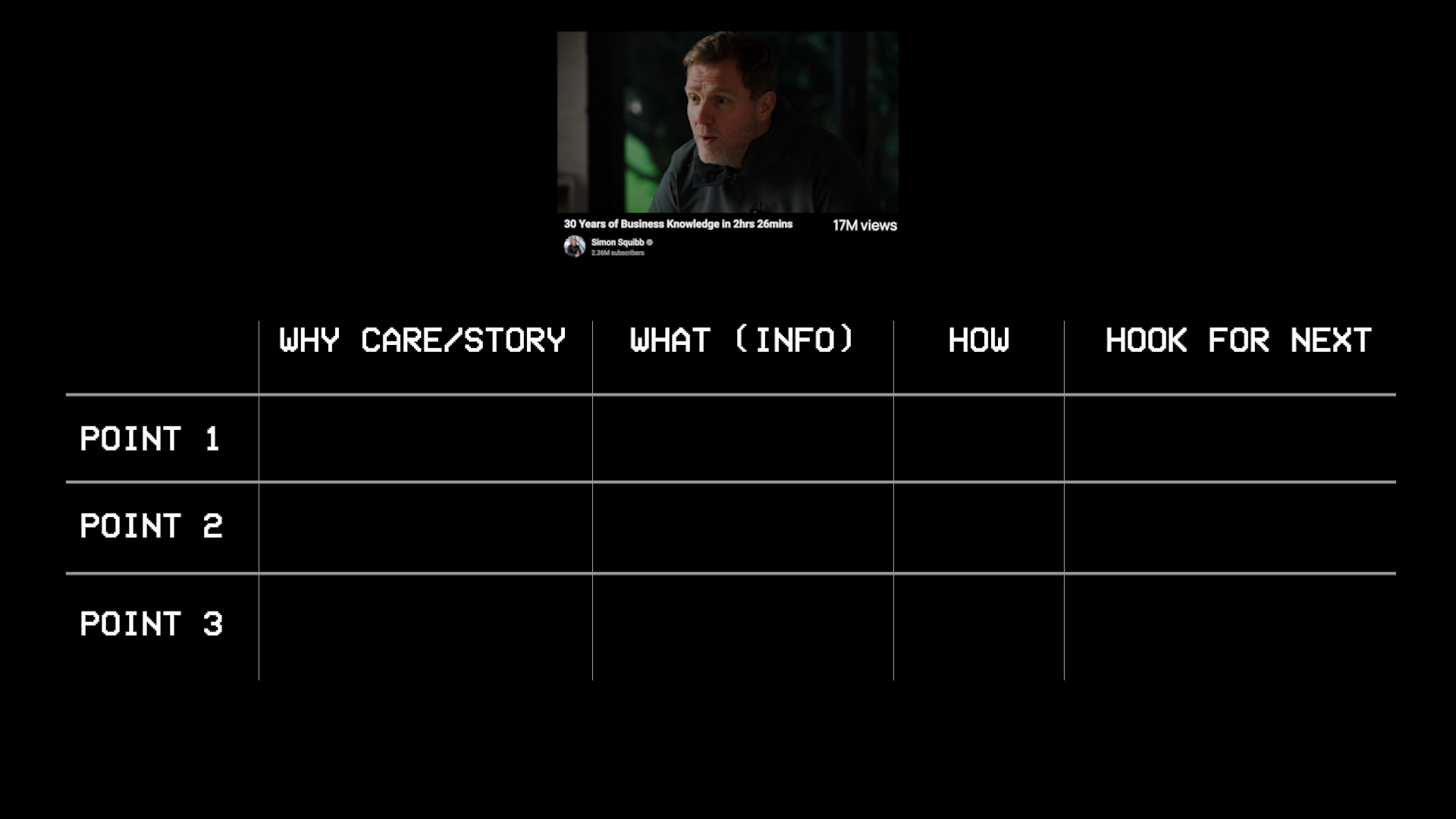
The video is broken down into it’s core points,
with a why or a story at the start of each point to add some weight to it.
then the actual information itself,
then how you the viewer can implement it,
then a hook for the next section of the video.
This is how information is shared.
But when it comes to sharing stories, it’s not as simple as just recounting their life stories with all the unremarkable and boring bits left in:
Heroes Journey
If you can recall a guru’s life story…
It’s likely because they’ve engineered their A to B transformation into the heroes journey storytelling structure:
They start in the ‘Ordinary World’ - which just happens to be the exact same corporate hell or broke reality you’re in now.
Then, they receive a ‘Call to Adventure’ - usually a moment of total burnout or a chance encounter with a mentor.
They cross the threshold, face the ‘Supreme Ordeal’ (the struggle you’re currently facing),
& return with the ‘Elixir’ - Wisdom or prize - Which is the Unique Mechanism they are now trying to sell you.
It’s the same storytelling structure used for Harry Potter, Lord of the Rings - Pretty much every good story is a riff of this structure.
And this is all designed to keep alive at all costs- what’s called a curiosity loop:
Curiosity Loop
At the start of this article, I opened multiple curiosity loops; Planting unanswered questions in your head, that will only be answered once you’ve completed all of the psychological triggers in the article.
That is a curiosity loop.
But every once in a while - whilst watching a video - you’ve answered most of the questions that were raised in your head - but you for some reason still haven’t clicked off…
Sunk Cost Fallacy
Once you’re that far in, once you’ve reached level 3, step 5 or point 9 of whatever the video is, you’re experiencing the sunk cost fallacy…
Which is where (subconsciously) you tell yourself:“I’ve made it this far in, I may as well stay to the end of the video”
This is the reason loading bars are in videos,
videos are broken down into steps or levels,
or even saying “if you can’t watch to the end of the video, you won’t be successful”
Loss Aversion
Cognitive science tells us that you’re hardwired to fear losing more than you care about winning.
This is called loss aversion.
and it’s why “Stop wasting your time” is always more powerful than “Save two hours.”
Winter is Coming
And a big way of framing this potential loss is the Winter is coming technique ...
Which pitches our ‘in crowd’ against an unavoidable event that will negatively affect them.
Doomsday.
This is why you see lots of fearmongering online - “This industry is dead, that industry is being wiped out”
Because fear sells.
But everything we’ve spoken about so far is used in hopes of building a Pavlovian effect in your brain:
Pavlovian Effect
Pavlov was a neurologist from the 1890s…
He noticed that when he put some food infront of dogs, the dog would drool.
(Obviously)
But then, Pavlov rang a bell every time he gave the dog food.
After a while, just the bell alone was enough to make the dog start drooling.
Every piece of high performance content, every psychological trigger we’ve spoken about, is engineered to spike your dopamine and spike your emotions.
Just like ringing the bell makes the dog drool:
What this all means…
Your favourite guru posting a video makes you click,
Them relating perfectly to your situation makes you like them,
them telling you you’re the ‘in crowd’ and to ignore the ‘out crowd’ makes you loyal,
Them telling you winter is coming, makes you buy ;)