How Ali Abdaal Prints $6M/Year from his Personal Brand
Here's exactly HOW he does it, and how you can implement all of the best parts to build your own micro personal brand.
Ali Abdaal earns $6M/year from his personal brand.
WITHOUT compromising on his values, hustling 24/7 and burning out OR sacrificing his passions and hobbies.
Here's exactly HOW he does it, and how you can implement all of the best parts to build your own micro personal brand…
The niche trap:
Many people look to the broad content of Ali Abdaal, Alex Hormozi and Iman Gadzhi as to why "niching down" no longer matters.
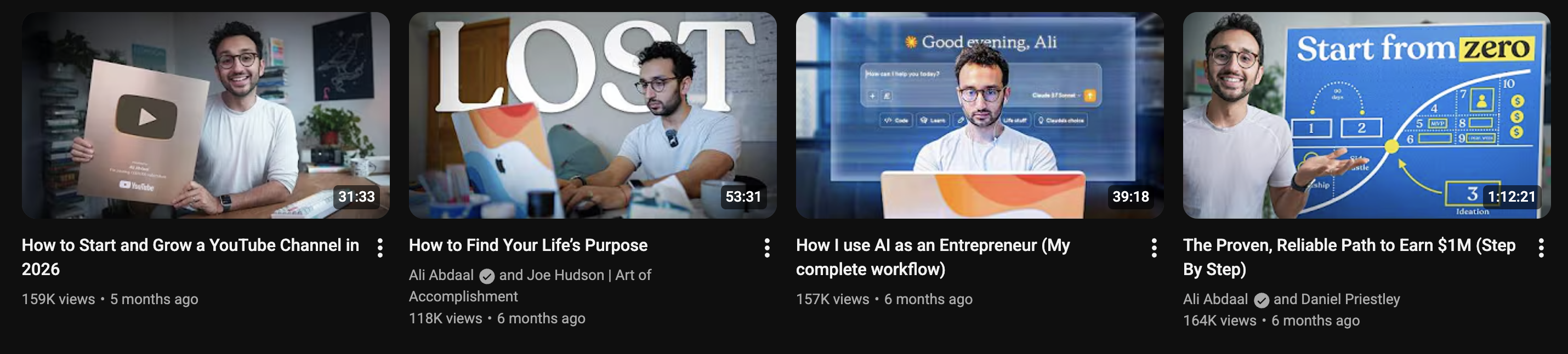
But here's the bigger picture:
Key takeaway: These guys ALL started out niched down, and branched out over time.
Ali started within the subniche of 'studying for medical school' and branched out after dominating it.
Is there exceptions to this? For sure.
But if your audience can't pinpoint what unique value you bring, or your value is simply too broad, you'll never gain that initial loyal audience and traction.
Let me introduce you to a concept that will make this easier for you: Subniches.
I'd recommend starting out your personal brand with 1 niche, and anywhere from 1-3 sub niches, depending on your unique area of expertise and angle.
For example:
- Niche - Video editing (too broad to compete, right?)
- Subniches - AI in video editing, starting freelancing, finding clients (perfect)
You can easily dominate these subniches, and then branch out based on what performs and what you enjoy creating.
Killer ideas:
Ali Abdaal relies on proven concepts & competitor research to come up with YouTube video ideas.
Very simply, a proven concept is taking winning ideas from other channels, and creatively adapting them.
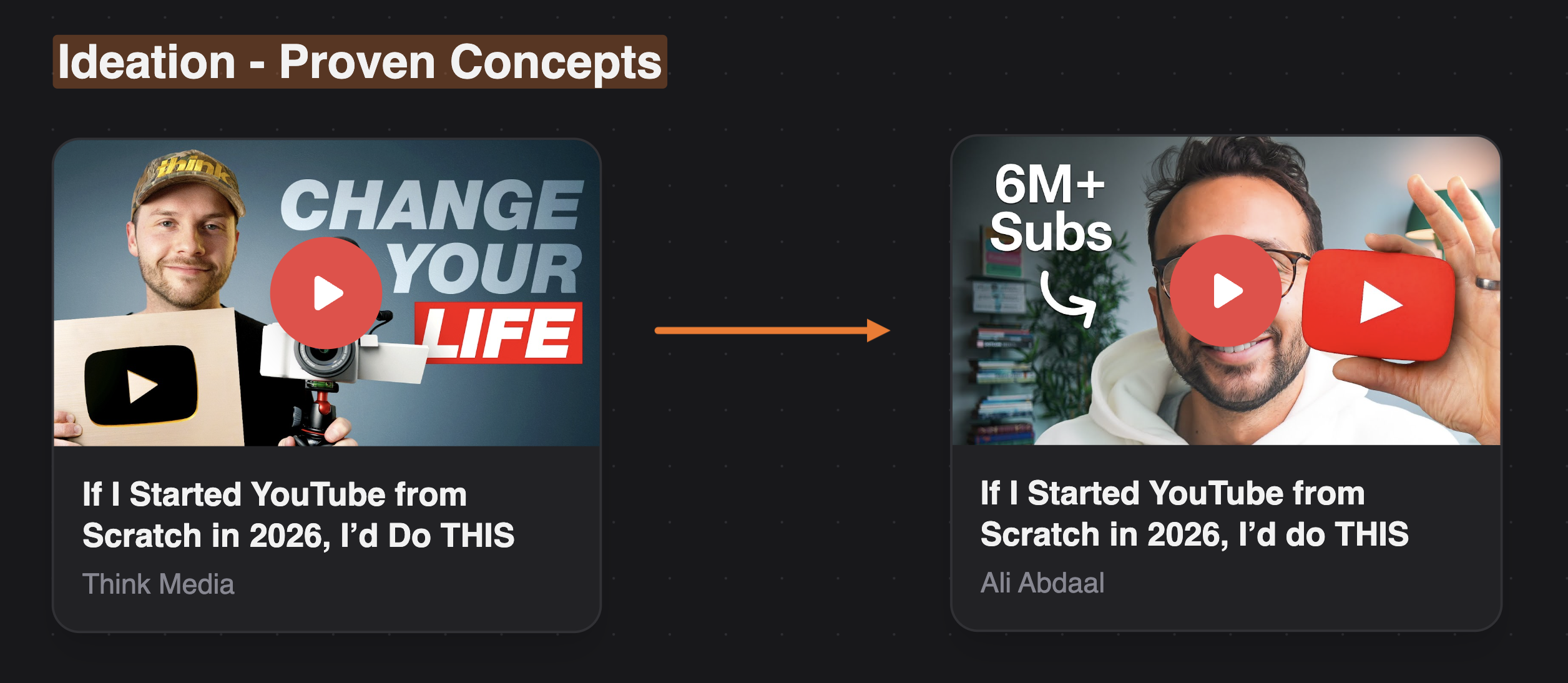
This puts him one step ahead of if he were thinking of ideas from scratch.
You can use viewstats.com to find these proven concepts.
Look for proven concepts within your niche, similar niches and from top personal brands as a whole.
Weight these proven concepts based on:
- How recent the proven concept is,
- How well YOU can apply it to your content
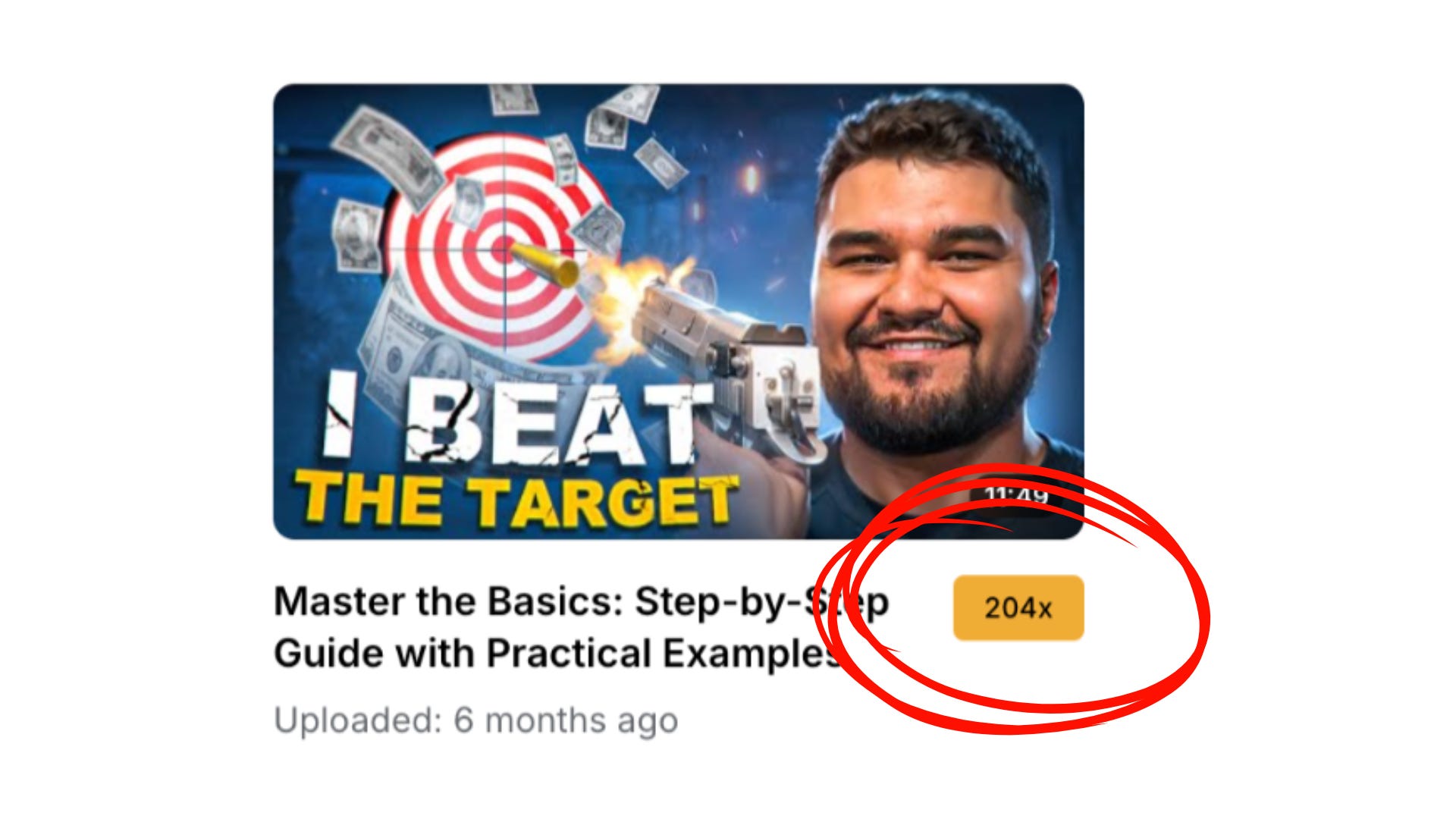
- And to what extent it's outperformed the channel's average…
Because each proven concept has an 'outlier score'. This is the rate at which it has outperformed this channel's average views.
If a channel that averages 500 views, got 123,456 views on a video, THAT'S an outlier and a proven concept.
We can base our title ideas on these.
Don't directly copy, just take inspiration and add your own creativity, or even merge 2-3 proven concepts into one!
WARNING: Proven Concepts can become saturated. Audience's stop responding to them as they are everywhere.
The aim is to be EARLY with fresh, novel &creative ideas - rather than the last one on the copyslop bandwagon.
Try to gauge where you are in the proven concept's life cycle by searching the key words into YouTube. Is it still performing well? Or is it now just copyslop?
Viral video breakdown:
Firstly we have the hook. This is to capture the attentiion of people, and get them invested into the video - in hopes that they don't click off.
- Reaffirm the title of the video (this is called click confirmation)
- Agitate the painpoint of the viewer with empathy, describe their pain better than they can.
- Signpost to what's coming up in the video (value promise)
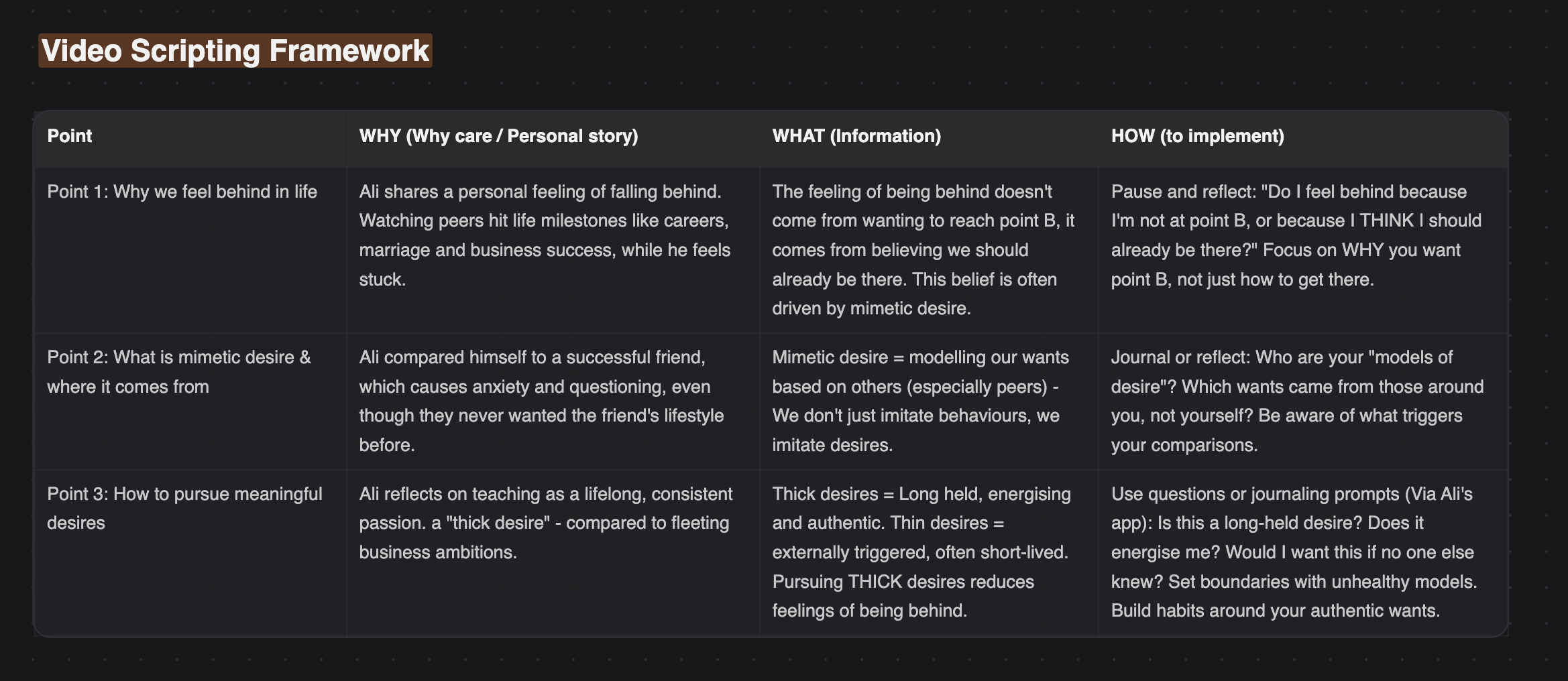
Then, Ali uses the exact same scripting framework that Hormozi uses, in fact, almost every informational video you see on YouTube follows this one scripting framework:
1. Why (why the audience should care - normally a personal story from Ali)
2. What (the information)
3. How (the audience can implement this)
Here's an example:
7-11-4 Rule (Middle of funnel)
This is where things get interesting.
Ali uses a range of free lead magnets like his book - Feel good productivity, his newsletter LifeNotes, as well as workshops and articles.
This builds trust with his audience and nurtures them into a sale.
Key takeaway: Studies show that buyers tend to follow the 7-11-4 rule.
7 hours with you, across 11 touchpoints, across 4 platforms.
Is this ALWAYS the case? Nope.
Some instances prove customers convert in a shorter timeframe/ fewer touchpoints, others prove the opposite.
But this 7-11-4 rule stresses the importance of showing up consistently, and enough for your audience to know, like and trust you. More on this in a moment
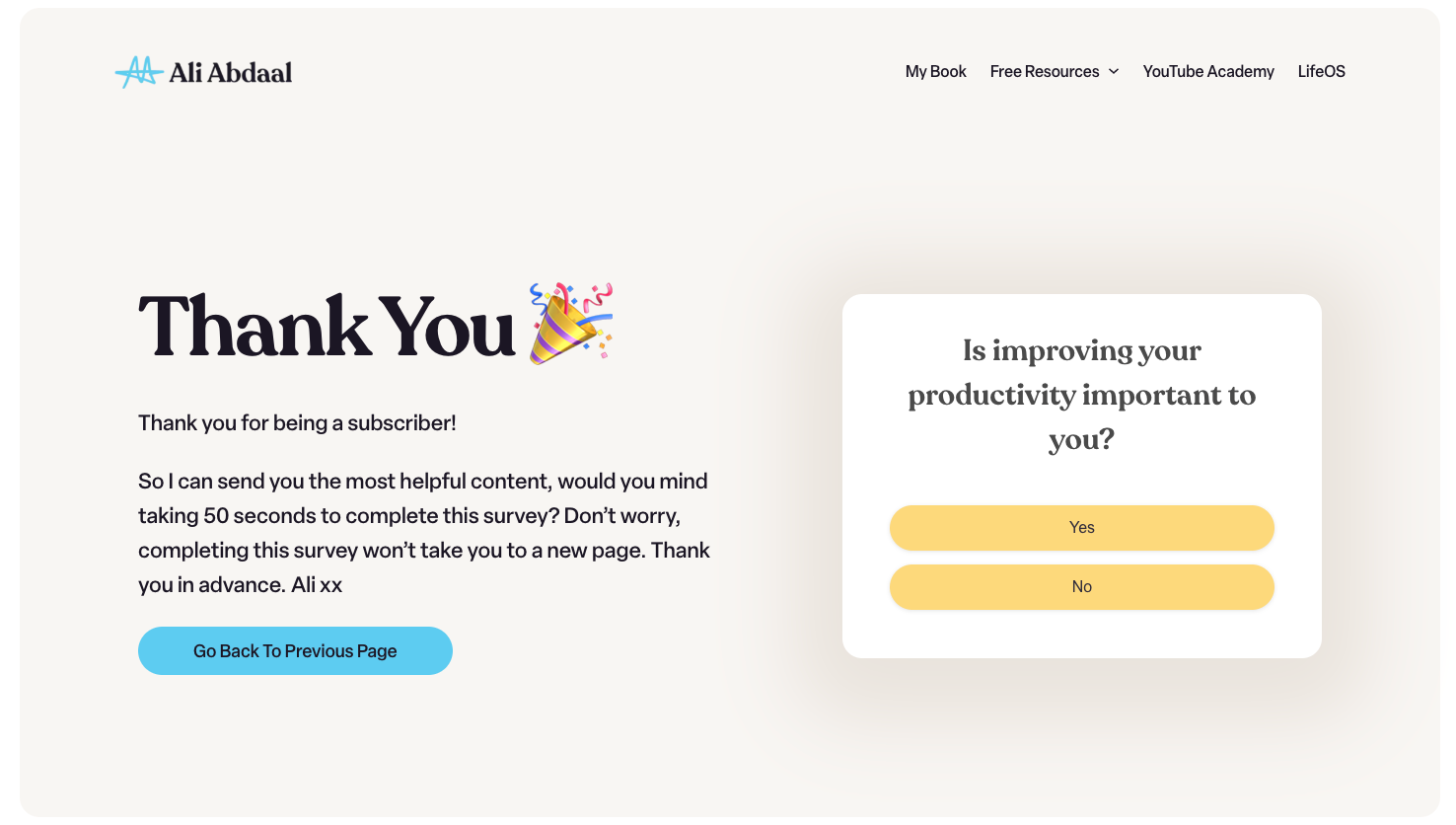
Now we've established that Ali has a broad audience…
So once leads enter his lead magnet forms to grab a free resource or join his email list, he segments/categorizes the leads based on where they are now and whether they're a good fit for his 2 digital products.
It's kinda like him clarifying how he can help you, before you're even on his email list.
Know, Like & Trust (Bottom of funnel)
Ali works with sponsors, but most of his revenue comes from digital product sales.
He has 3 digital products right now; Part time YouTuber Academy, LifeOS Productivity System and his new cohort-based coaching; Lifestyle Business Academy.
By this stage in the funnel, leads have become familiar with Ali through his content, built a deep liking and trust through his lead magnets and emails, and a certain % are ready to make a buying decision.
This is how Ali is able to charge up to $997 for his digital products, without a sales call funnel.
Key takeaway: Just like Hormozi, giving away the information for free on YouTube - selling the implementation inside his digital products.
Ali frames his Lifestyle Business Academy with an 'application process' which signals scarcity - that they don't just accept anyone, and are actually selective with who they work with.
Ali also continues the transparency and authenticity from his videos, on his website. Where he has a realistic timeframe to expect, going from stage to stage. This is to set realistic expectations for his students.
The bottom line
Ali has proven that with consistency and dedication, there's no reason why all of us can't crack YouTube and build a personal brand around our interests and values.
You don't have to be over the top, deviate from your principles or change your interests to succeed.
You just need the right skills, tools and execution.